
By 1860, Virginia had a slave population of nearly 500,000 (approximately one third of the states population) who were the property of some 50,000 Virginians. Virginia had so many slaves that the exportation of slaves had become an important part of the state’s economy.
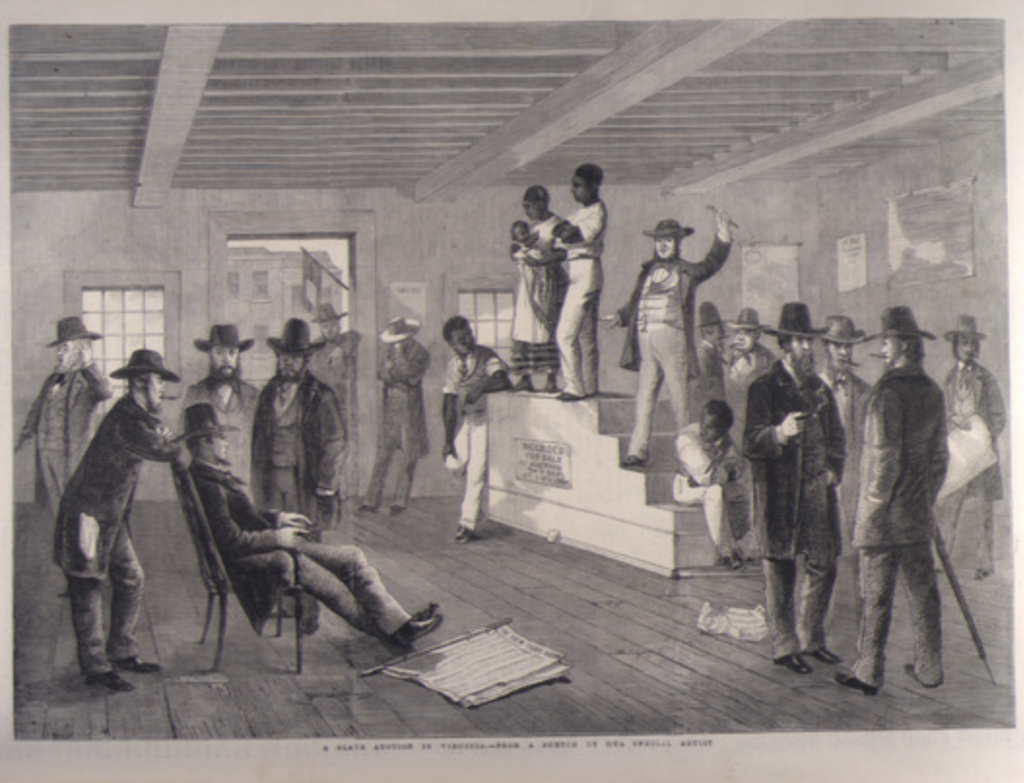
Slave Auction in Virginia, George Henry Andrews, “Slave Auctions in Richmond, Virginia,” The Illustrated London News, vol. 38 (Feb. 16, 1861), p.139.
Born in Virginia, Thomas Jonathan “Stonewall” Jackson graduated from the United States Military Academy at West Point in the class of 1846. He served in the United States Army during the Mexican-American War of 1846–1848 and distinguished himself at the Battle of Chapultepec. From 1851 to 1861, he taught at the Virginia Military Institute.
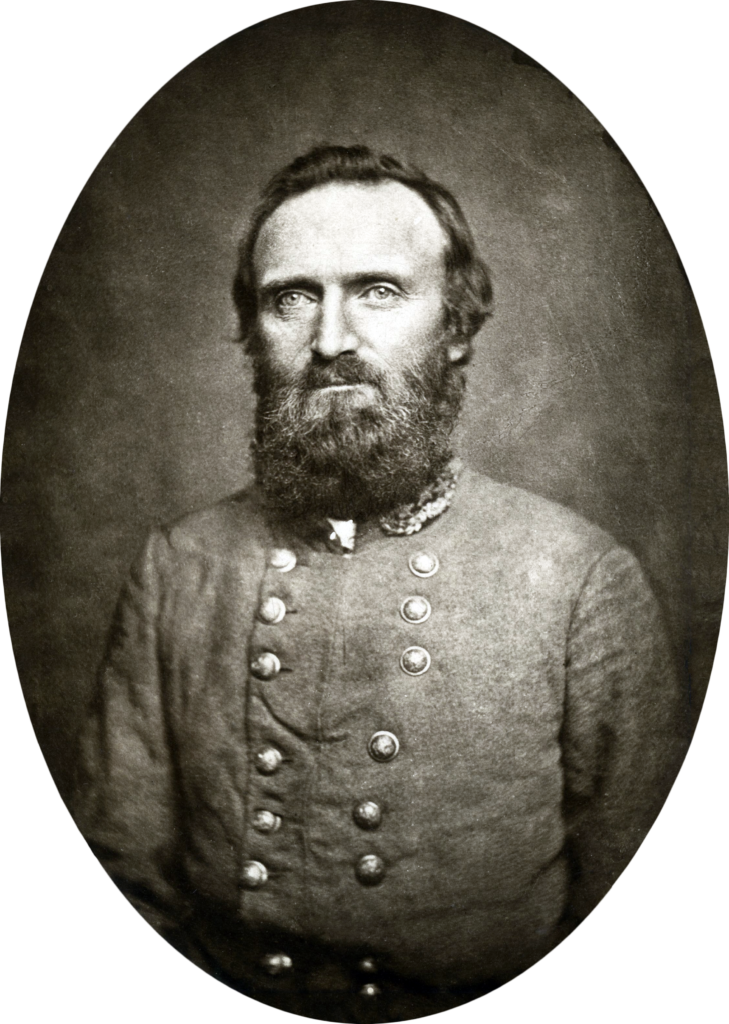
During the Civil War, Jackson became one of the best-known Confederate commanders playing a prominent role in nearly all military engagements in the Eastern Theater of the war until his death. Military historians regard him as one of the most gifted tactical commanders in United States History. His tactics are still studied.
After Jackson’s death, his military exploits developed a legendary quality, becoming an important element of the ideology of the “Lost Cause”.
According to the “Lost Cause”, the participation of the Confederate States in the American Civil War was a just and heroic defense against Northern Aggression. Beginning in 1866, it has continued to influence ideas of Southern heritage to the present day.
“Lost Cause” supporters praised the culture of honor and chivalry found in the antebellum South, argued that enslaved people were treated well and denied that slavery caused the war. Instead, they claimed the war was fought to defend States’ Rights and to protect their way of life. Modern historians overwhelmingly disagree with these characterizations, noting that the central cause of the war was slavery.
“Lost Cause” activity intensified around the turn of the 20th century, when efforts were made to memorialize the Confederate dead by building Confederate monuments and writing their own version of history. “Lost Cause” organizations sought to ensure Southern Whites would know what they called the “true” narrative of the Civil War, and continue to support White supremacist policies such as Jim Crow Laws. In that regard. White supremacy became a central feature of the “Lost Cause” narrative.
In 1904, the Virginia General Assembly passed a law allowing for the construction and protection of war memorials.
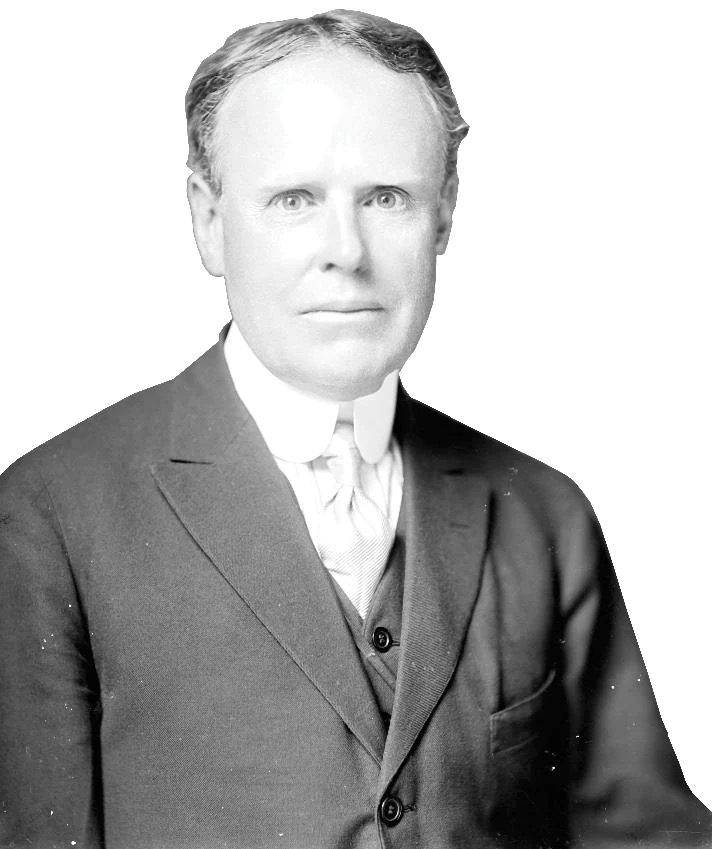
Paul Goodloe McIntire was an American stockbroker, investor, and philanthropist from Virginia who served on the Chicago and New York Stock Exchanges.. He gave much of his fortune away as gifts to the University of Virginia and the City of Charlottesville. One of his gifts was a set of four public sculptures, George Rodgers Clark, Thomas “Stonewall” Jackson, Robert E. Lee and Meriwether Lewis and William Clark.
Sculptor Charles Keck won the contract for the bronze equestrian statue of Jackson leaning forward atop Little Sorel approaching a canter. It would be considered by many as one of the finest equestrian statues ever cast and his masterpiece.
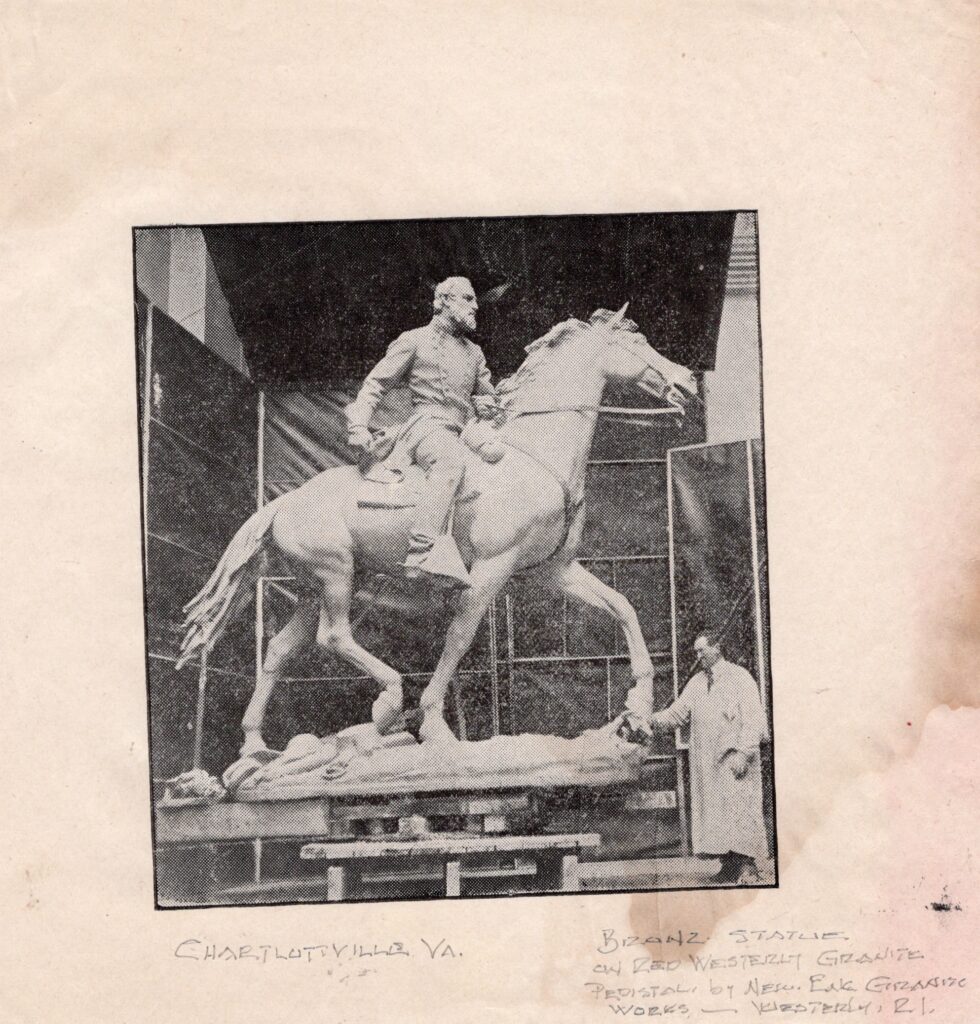
Sculptor Charles Keck with his model of the Jackson equestrian statue
He contracted the Lloyd Brothers Company to produce the massive pedestal that the statue would rest on. They in turn contracted the New England Granite Works in October of 1919 to cut the nine piece pedestal and base made of Westerly Red granite from one of their quarries. The pedestal and base was delivered in July of 1921 at a cost of $8,915.00.
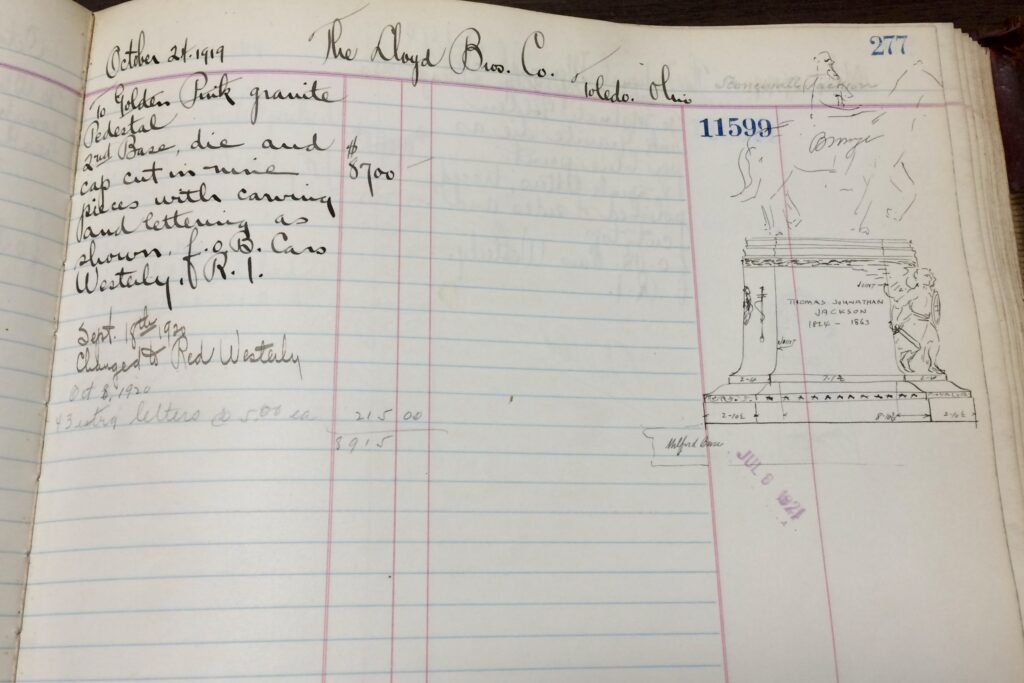
New England Granite Works order book 12, page 277, order 11599
During the summer of 1921, the KKK organized a public address inside the courthouse just feet from where the Jackson monument would be unveiled in October. The public address was supported by bulletins posted around town that warned that “law and order must prevail.” They announced: “All undesirables must leave town. The eye of the unknown has been and is constantly observing. We See All, We Hear All, We Know All.” The bulletin ended with an invitation. Any “100 percent” White native born American man who “held to the tenets of the Christian religion, Free Schools, Free Speech, Free Press, Law Enforcement, Liberty, and White Supremacy” were welcome to join.
The unveiling of the new equestrian statue erected in Stonewall Jackson’s honor, was on the spot previously occupied by McKee’s Row, a Black neighborhood. That “eyesore” had been torn down.
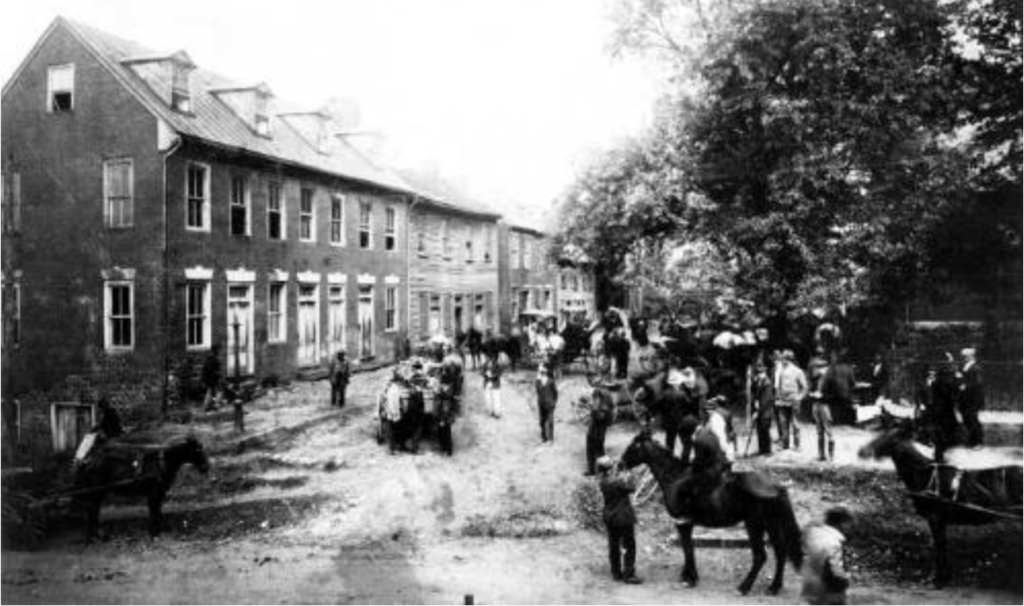
McKee’s Row, Charlottesville, VA
The statue was supported by a red granite pedestal dominated by allegorical figures of Faith and Valor, two strong, strikingly Aryan angels. Valor holds a sword and Confederate battle flag shield while Faith is praying.
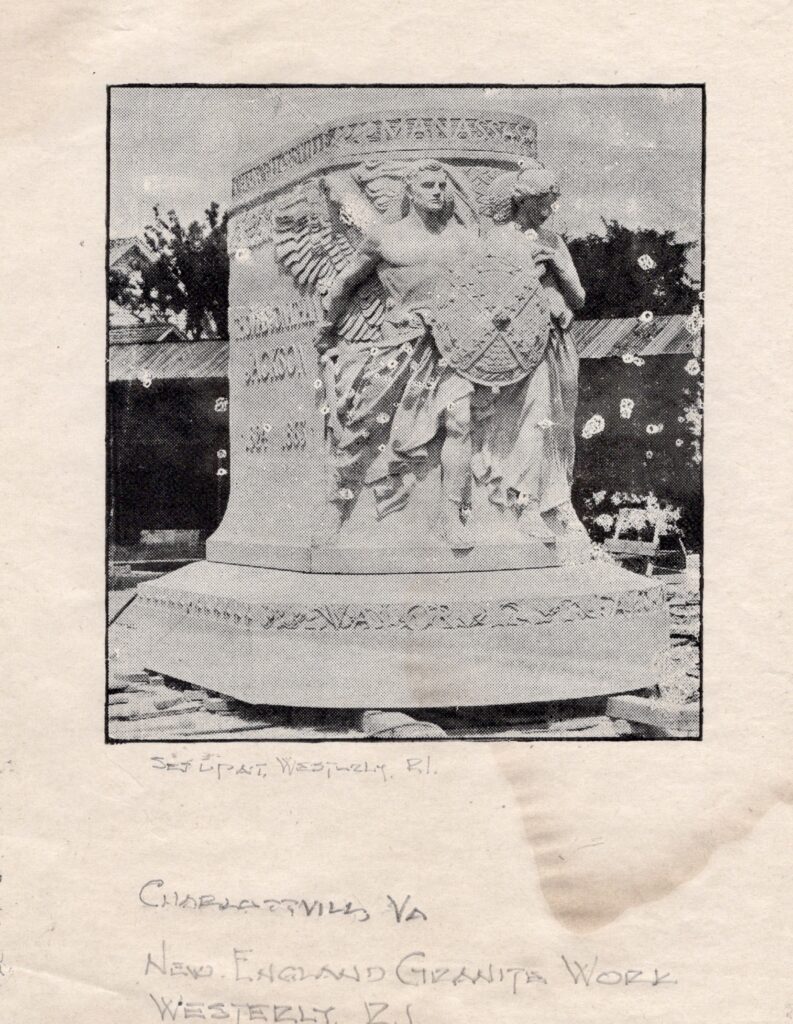
The Stonewall Jackson pedestal at New England Granite Works in Westerly, RI
The unveiling was the capstone of three days of celebration that included a grand gala reunion of Confederate veterans and a five thousand-person march through the city. It concluded with White school children forming as a living representation of the Confederate battle flag in Midway Plaza, which crowned the high ground overlooking the city’s largest Black neighborhood, Vinegar Hill.
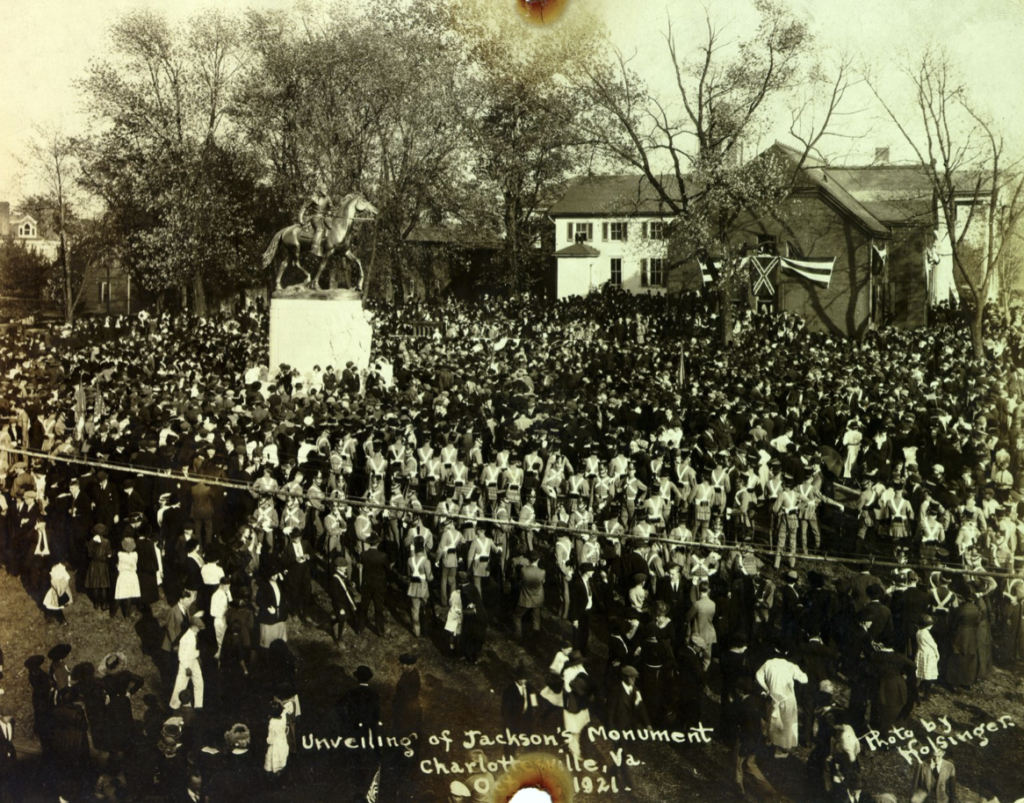
In 1997 the War Memorial law was extended to include cities and the Stonewall Jackson statue was listed on the National Register of Historic Places.
In the wake of the mass shooting in Charleston, SC of 9 African Americans by a White supremacist, Dylan Storm Roof, in June of 2015, efforts were made across the South to remove Confederate monuments from public spaces and rename streets honoring notable figures from the Confederacy. While often successful, these efforts faced a backlash from people concerned about protecting their Confederate heritage.
Zyahna Bryant, then a student at Charlottesville High School, petitions the City Council for the removal of the statue of Lee and the renaming of Lee Park.
In April 2016, the Charlottesville City Council appointed a special commission, named the Blue Ribbon Commission on Race, Monuments and Public Spaces, to recommend to city officials how to best handle issues surrounding Confederate statues and monuments in Charlottesville. In February 2017, the Charlottesville City Council voted 3–2 for the statue’s removal, along with the statue of Jackson.
Within a few days a lawsuit was filed to halt the city’s plans to remove the statue, citing state law.
On May 13, 2017, White supremacist Richard Spenser led a nighttime rally in Charlottesville to protest the city’s plans to remove the statue of General Lee. The event involved over 100 protesters from various alt-right groups, chanting slogans like “Jews will not replace us!” and “Russia is our friend!” while holding lit torches near the statue of Lee. The mayor denounced the rally as an attempt to bring back the days of the KKK.
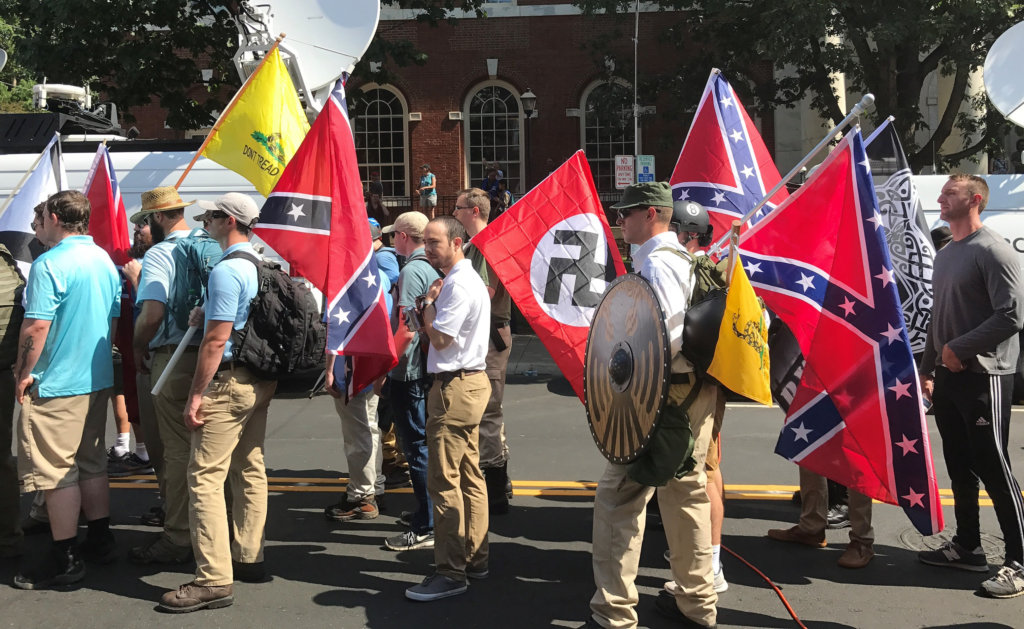
The next night, hundreds of Charlottesville residents held a counter-protest. Tensions mounted as Charlottesville’s downtown saw confrontations between the two groups, resulting in occasional scuffles and some arrests which led to the August 12 Unite the Right rally.
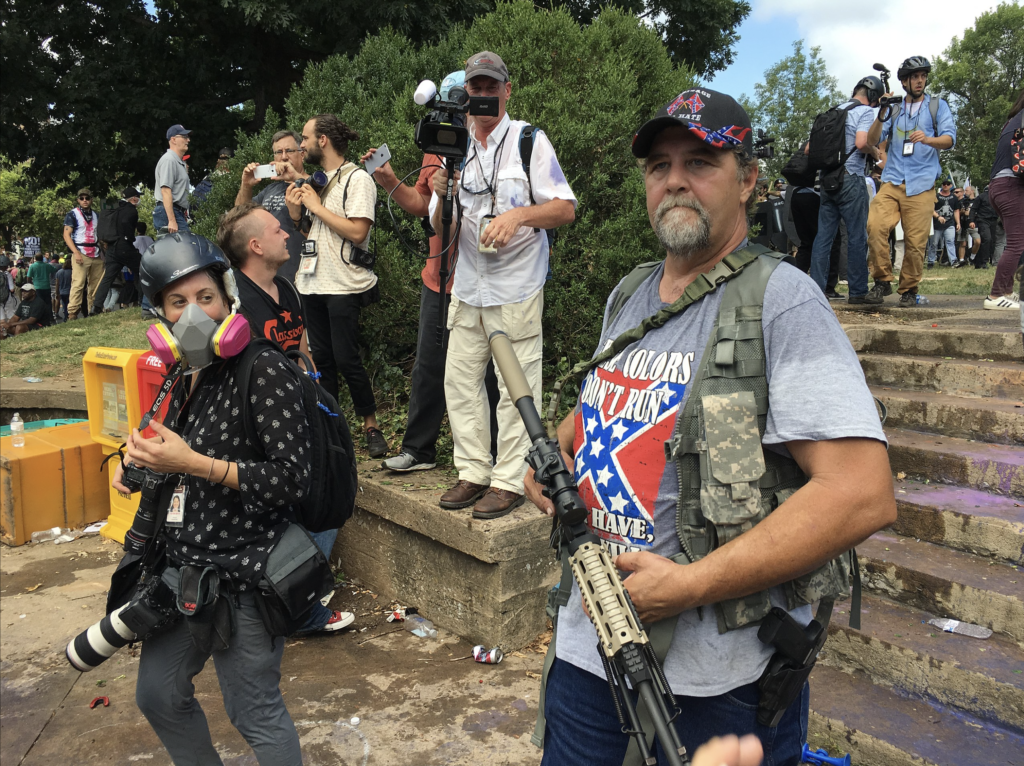
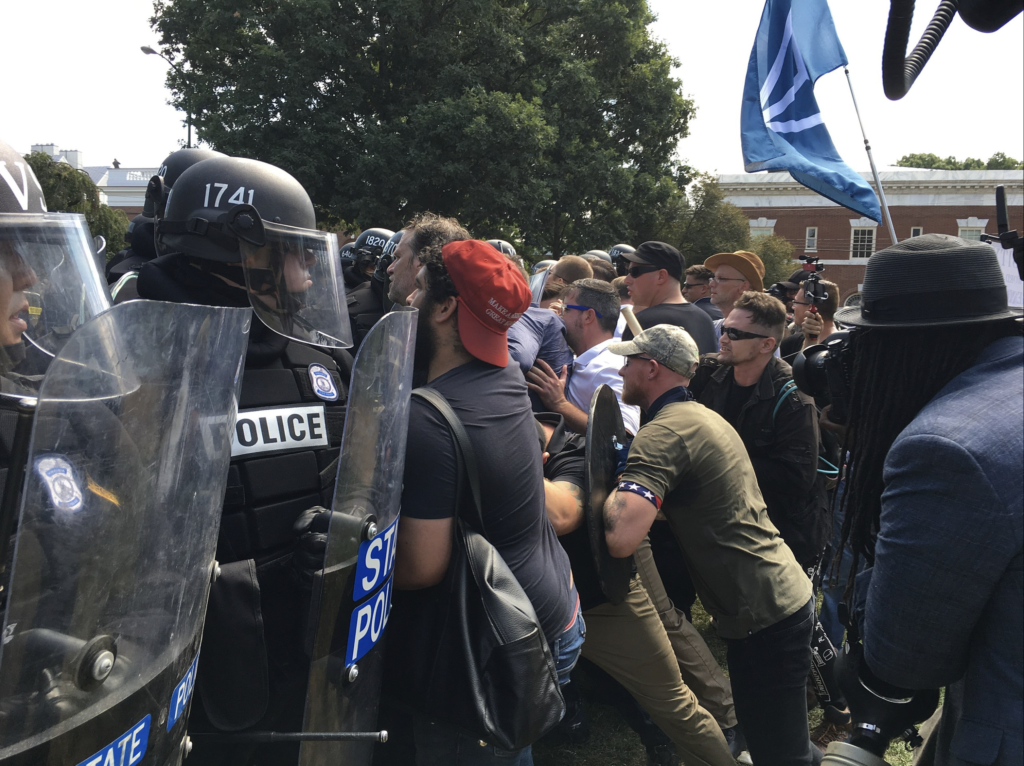
The goals of the Unite the Right rally included the unification of the American White Nationalist movement and opposition to the proposed removal of the statue of General Lee. The rally sparked a national debate over Confederate iconography, and White supremacy.
The rally turned violent after protesters clashed with counter-protesters. resulting in more than 30 injured.
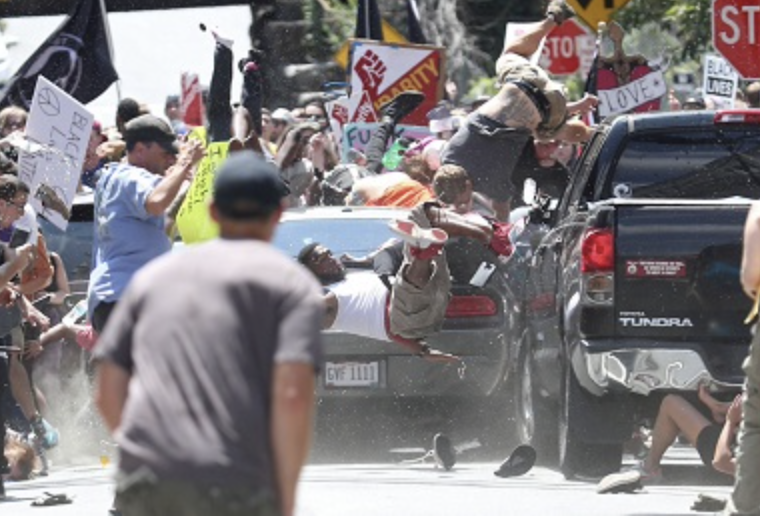
At around 1:45 p.m., self-identified white supremacist James Alex Fields Jr. deliberately rammed his car into a group of counter-protesters near the rally site, killing Heather Heyer and injuring 35 other people. Fields fled the scene in his car but was arrested soon afterward; he was tried and convicted in Virginia state court of first-degree murder and other crimes in 2018, with the jury recommending a sentence of life impresonment plus 419 years. The following year, Fields pleaded guilty to 29 federal hate crimes in a plea agreement that avoided the death penalty.
In 2019, a judge ruled that the City Council statue vote was in violation of state law and granted an injunction barring their removal. When Democrats took control of the General Assembly they altering the state law barring the removal of war memorials.
In September and October of 2019, both monuments were vandalized.
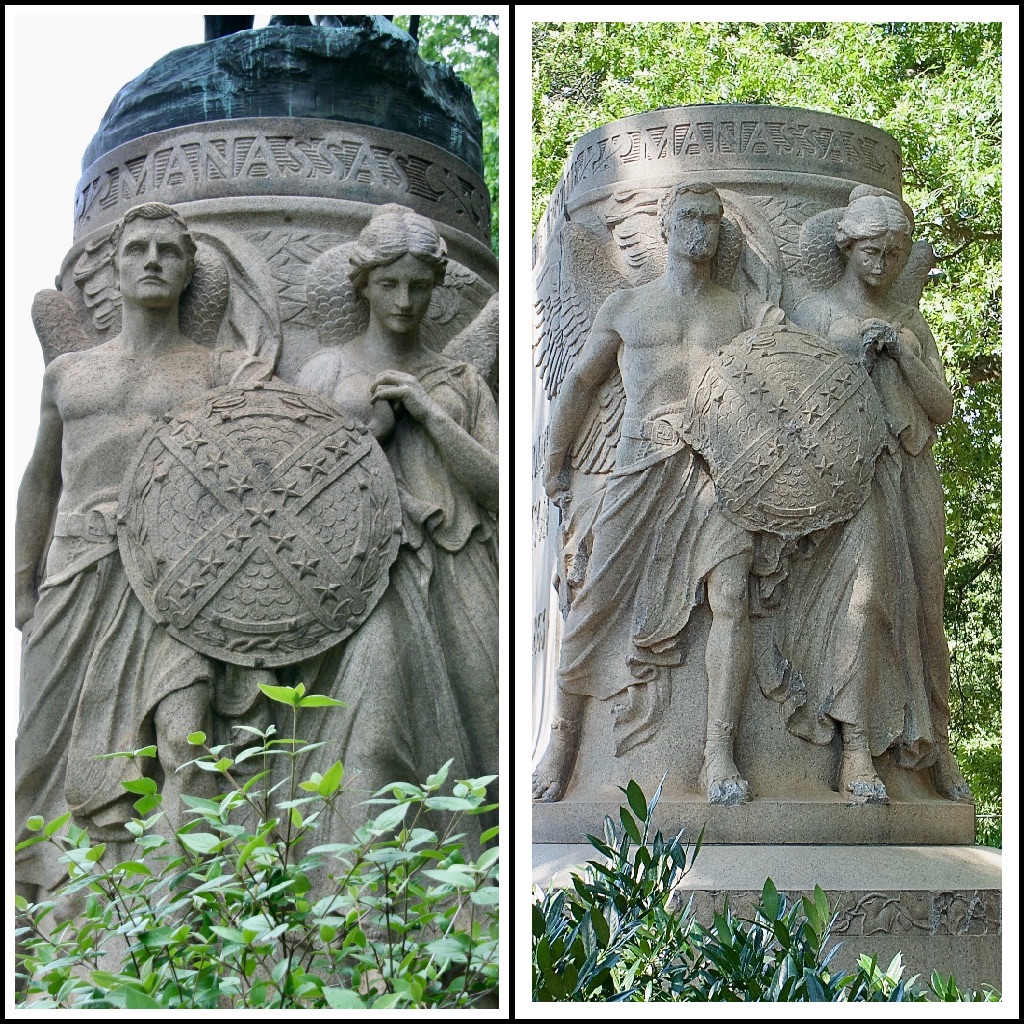
Left: a photo I took in 2011 of the monument Right: a photo I took in 2021 of the monument
In 2020, the General Assembly passed legislation granting localities authority of their monuments.
In 2021, the Supreme Court of Virginia upheld the legality of Charlottesville’s 2017 vote to remove Confederate monuments. The city council then removed the statues of Jackson and Lee.
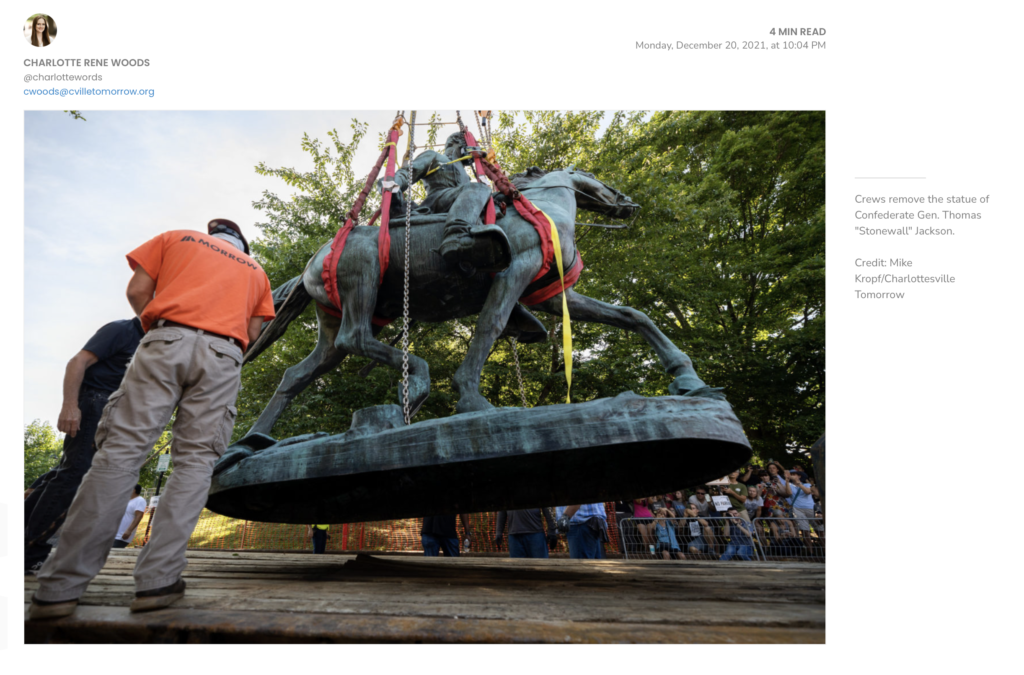
The Charlottesville City Council voted to ship the monument to LAXART, a Los Angeles-based nonprofit arts organization. LAXART would collaborate with the Los Angeles Museum of Contemporary Art for a planned 2023 exhibit in MOCA’s facilities and paid $50,000 to Charlottesville to acquire the statue.
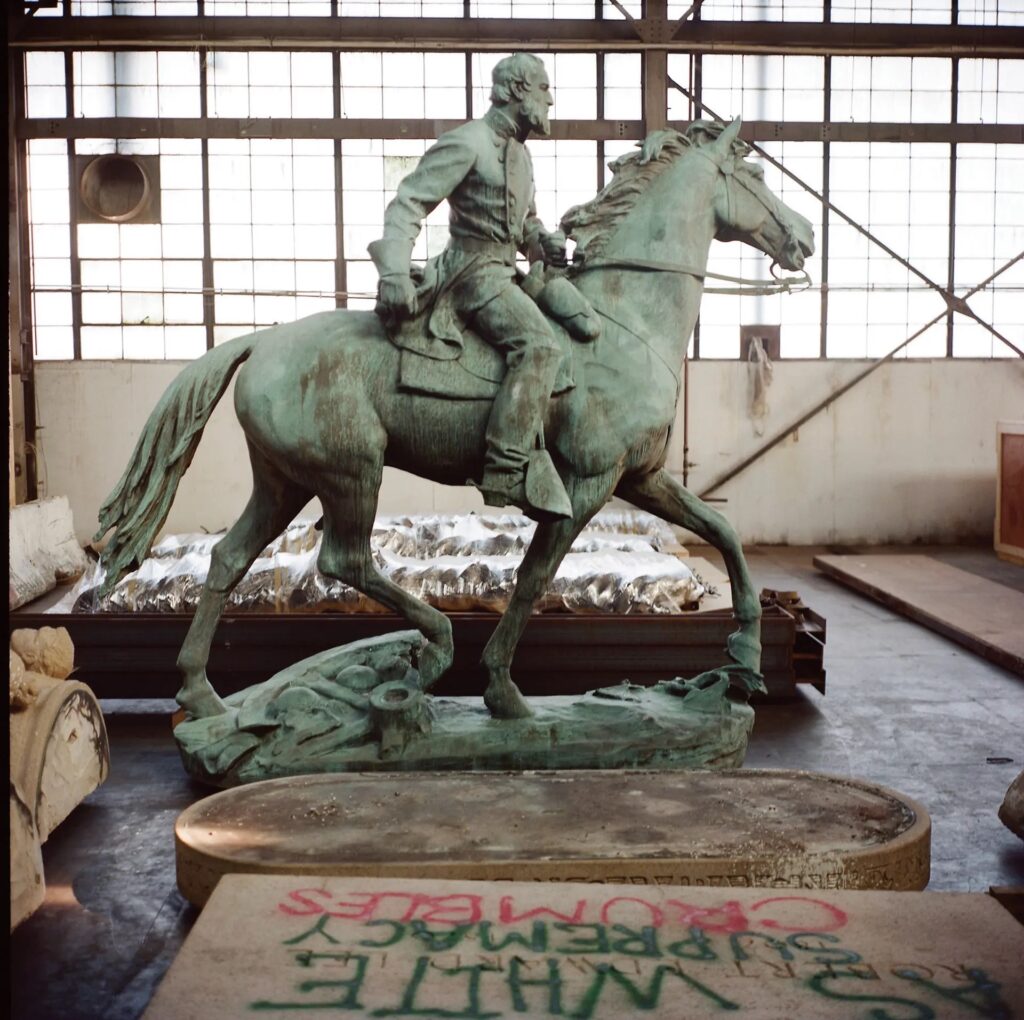
The statue and pedestal pieces at LAXART.
In 2025, The Brick (formerly LAXART) was ready for the public to view its Monuments display. The centerpiece of the exhibit was Kara Walker’s deconstruction of the Jackson statue which she titled Unmanned Drone.
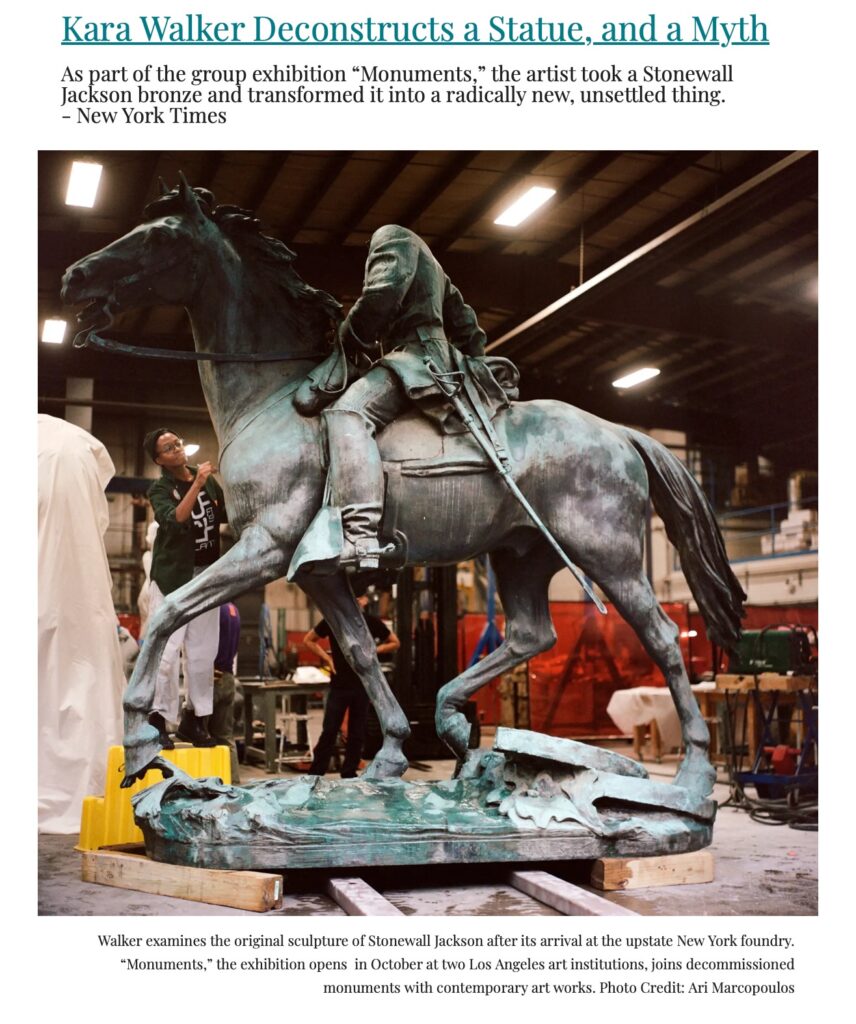
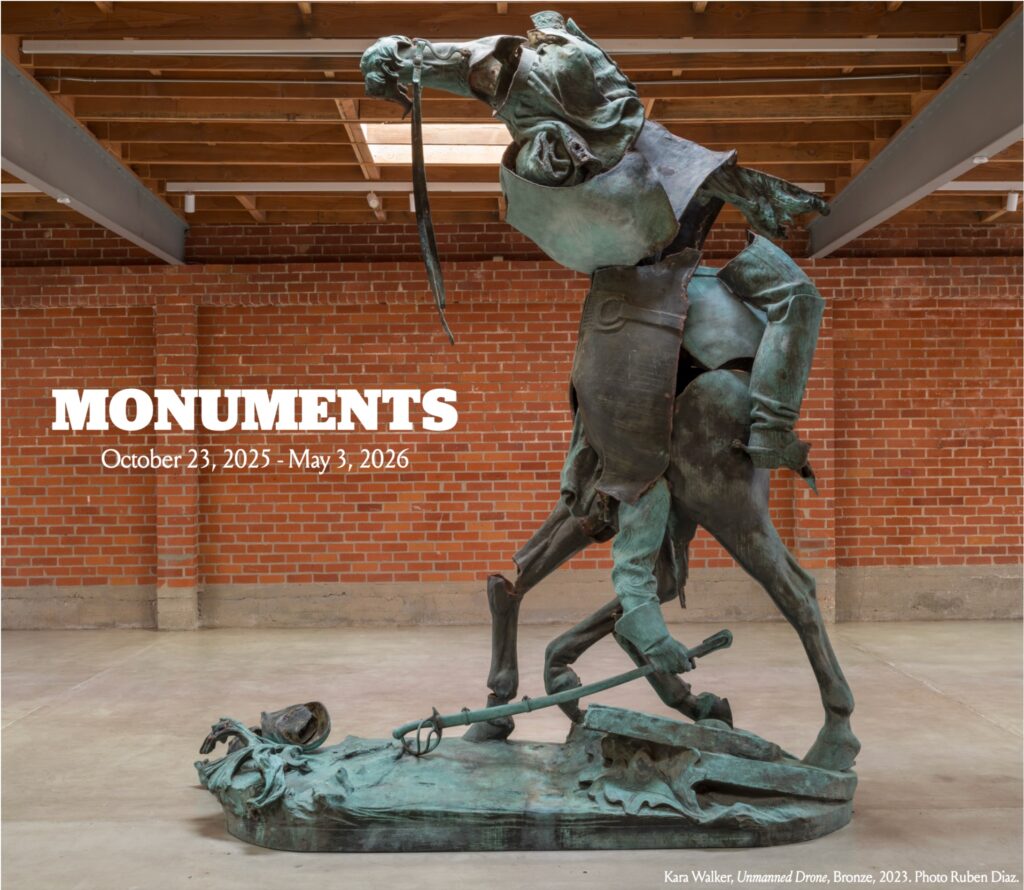
Unmanned Drone by Kara Walker
The Brick also hired Bethany Collins to turn smaller pieces of the Westerly Red granite pedestal into her Love Is Dangerous exhibit along with smaller works of art that The Brick could then turn into sets that they could sell to potential patrons.
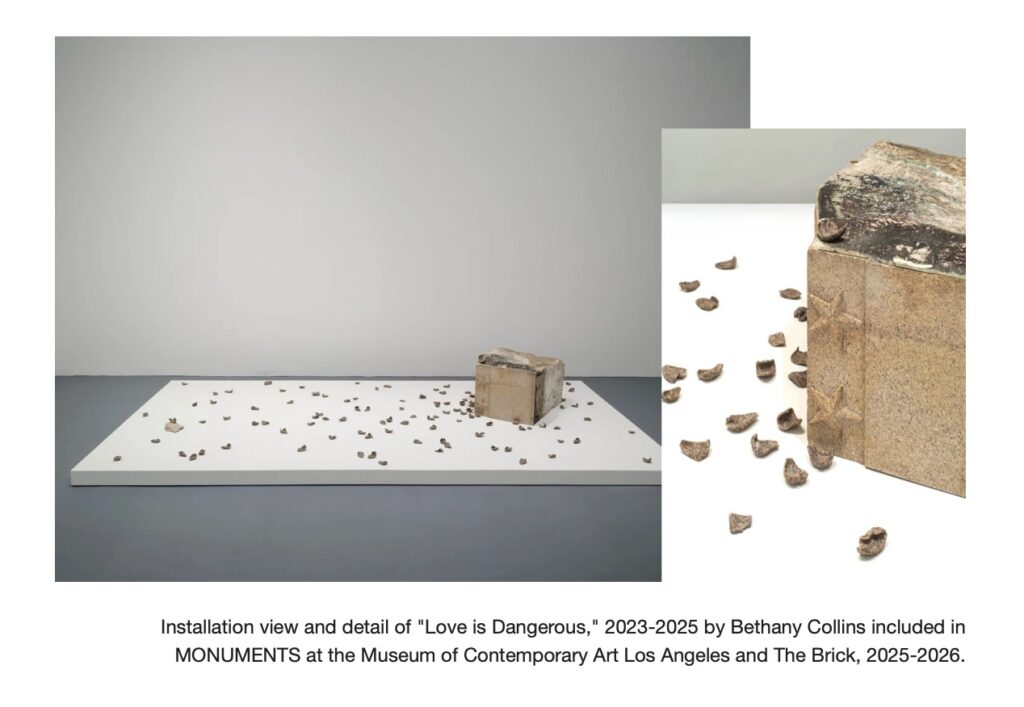

Two of Bethany Collin’s sets of Westerly Red granite from the Jackson pedestal that The Brick will sell to patrons.
With the deconstruction complete, Paul Goodloe McIntire’s gift to Charlottesville and the “Lost Cause” had truly become a lost cause.